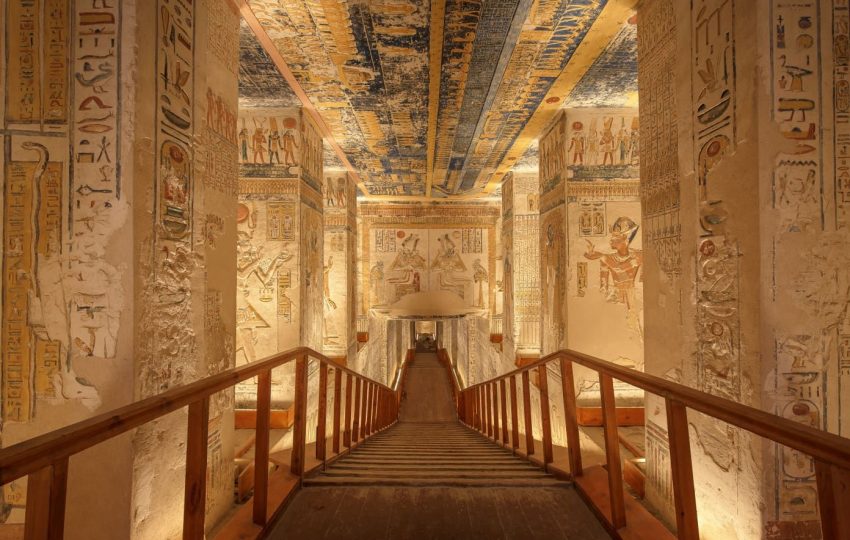
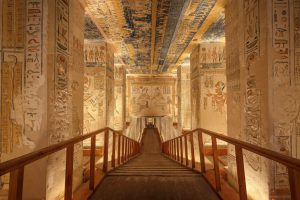
Your Luxor adventure begins early in the morning as your guide meets you at your hotel or Nile cruise. From here, you board your air-conditioned vehicle and begin the journey toward the West Bank, the sacred land associated with the afterlife in ancient Egyptian belief. Your first destination is the world-famous Valley of the Kings, the legendary necropolis where more than 60 tombs of New Kingdom pharaohs were carved deep into the mountains. Upon arrival, your Egyptologist provides a detailed introduction before guiding you into selected tombs. Inside, marvel at vibrant wall paintings, symbolic funerary texts, celestial scenes, and depictions of the pharaoh’s journey into the next world. Many of these decorations remain astonishingly preserved, offering an authentic look into ancient spiritual beliefs.
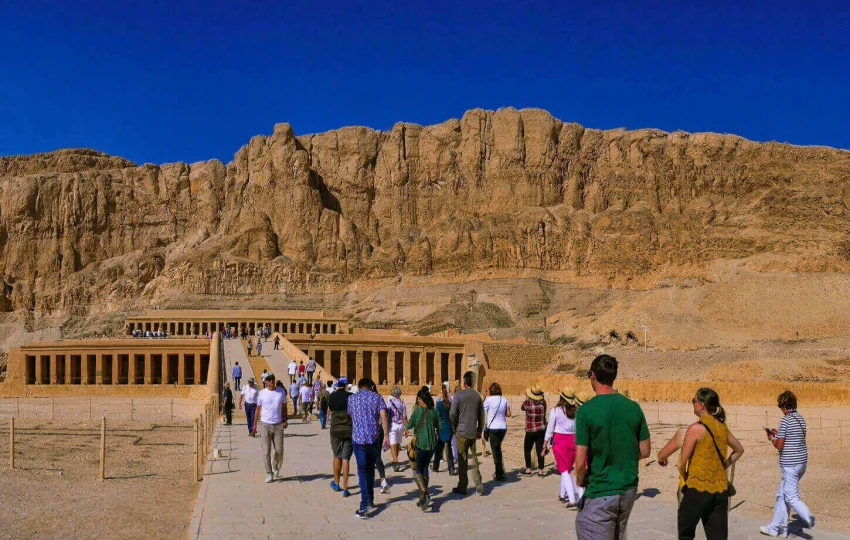
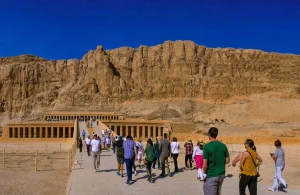
After exploring the Valley of the Kings, your tour continues to the magnificently designed Temple of Hatshepsut at Deir el-Bahari. Set dramatically against limestone cliffs, this three-terraced structure is one of Egypt’s most remarkable architectural achievements. As you ascend its ramps, your guide narrates the story of Queen Hatshepsut, one of Egypt’s most powerful rulers, and explains how the temple honored the god Amun and commemorated her accomplishments. The colonnades display scenes portraying her divine birth, trading expeditions to Punt, and rituals honoring the gods. The combination of landscape and design makes this temple a striking highlight of the West Bank.
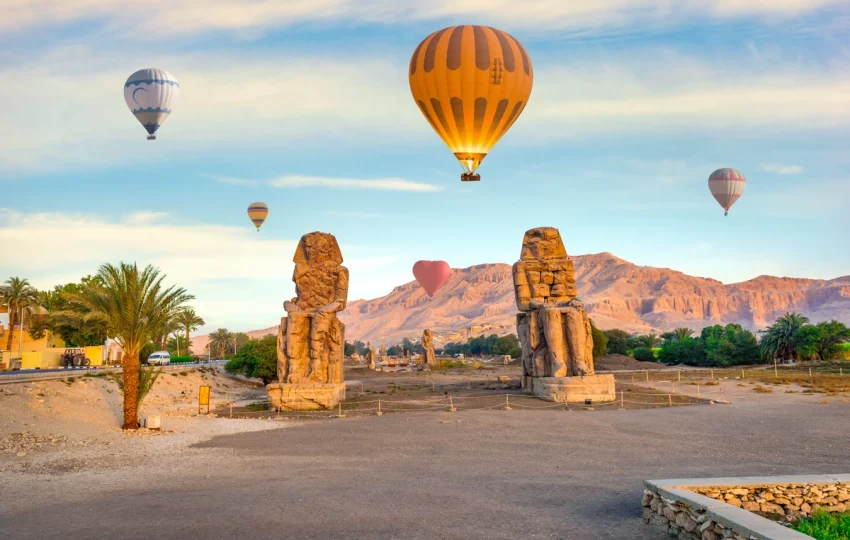
Before leaving the area, you stop at the iconic Colossi of Memnon, two massive seated statues of King Amenhotep III that once guarded the entrance to his vast mortuary temple. Though the temple has mostly disappeared, the statues still stand proudly at 18 meters high. Your guide explains the history behind these statues, their weathering over the centuries, and the ancient Greek accounts of the “singing Memnon,” a mysterious sound once reported at dawn.
Following your West Bank discoveries, you cross back to the East Bank, where the living world of ancient Thebes thrived. Depending on the timing, you enjoy lunch at a local restaurant before continuing your exploration. Your first major stop on the East Bank is the grand and atmospheric Luxor Temple. Unlike other temples dedicated exclusively to the gods, Luxor Temple was mainly built to celebrate the royal ka (spirit) of the kings. Walk between towering walls, monumental statues of Ramesses II, and intricately carved hieroglyphics that narrate stories of kingship and divine connection. The temple’s long history includes contributions from Amenhotep III, Tutankhamun, Ramesses II, and even Alexander the Great, whose shrine can still be visited.
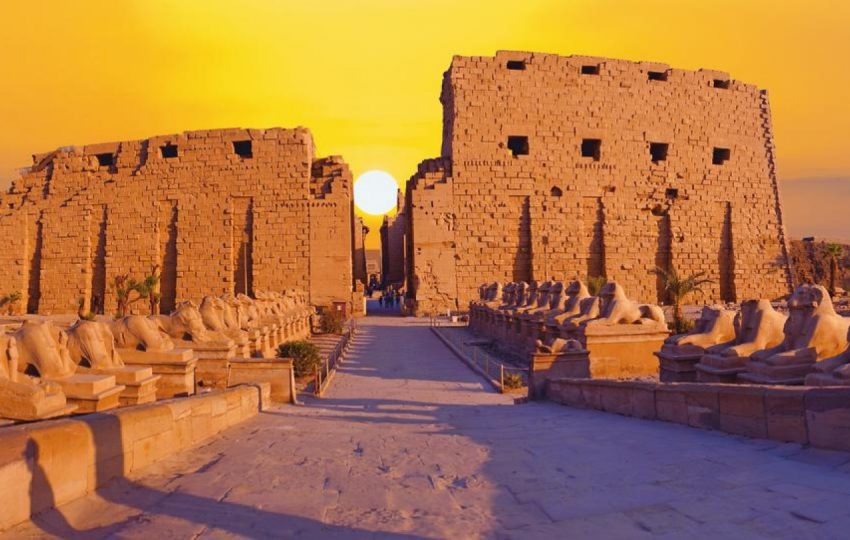
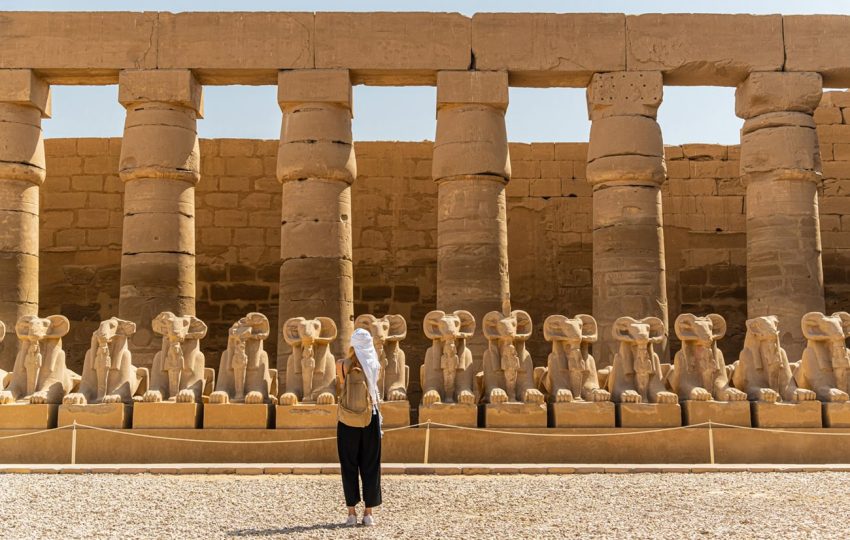
From Luxor Temple, you continue north to the largest religious complex ever built: Karnak Temple, the monumental heart of ancient Egypt for more than 1,500 years. Karnak is not a single temple, but a vast complex dedicated primarily to the Theban Triad: Amun, Mut, and Khonsu. Your visit begins at the breathtaking Avenue of Ram-Headed Sphinxes, which once connected Karnak to Luxor Temple. As you enter through the massive first pylon, you step into a world of colossal statues, obelisks, sanctuaries, courtyards, and sacred lakes.
One of the most spectacular areas is the Great Hypostyle Hall, a forest of 134 columns soaring up to 23 meters high. Your guide explains how this hall was constructed by Seti I and Ramesses II, and how its inscriptions document military victories, religious rituals, and offerings to the gods. Even today, the hall remains one of the most impressive architectural achievements in human history.
Your tour continues to the Sacred Lake, where priests once purified themselves before performing rituals. Nearby stands the towering Obelisk of Hatshepsut, one of the tallest surviving ancient obelisks. You also explore the Festival Hall of Thutmose III, the Precinct of Mut, and other secondary chapels, depending on the time available. Karnak’s immense size makes every visit unique, and your guide ensures you see the most important highlights.
Throughout the day, your Egyptologist guide offers historical insights, explains symbolism, and answers your questions, providing context that brings each monument back to life. You learn how the temples were aligned with celestial movements, how pharaohs expanded them over generations, and how religious ceremonies shaped ancient civilization.
After completing your exploration of the East Bank, your tour concludes with a comfortable transfer back to your hotel or Nile cruise. This full-day program provides a complete and immersive introduction to Luxor’s greatest treasures, merging the majesty of the West Bank with the grand ceremonial monuments of the East. By the end of the tour, you will have walked through royal tombs, ascended temple terraces, stood before colossal statues, and wandered through ancient halls that have endured for over three thousand years—an unforgettable journey through the heart of Egypt’s ancient world.